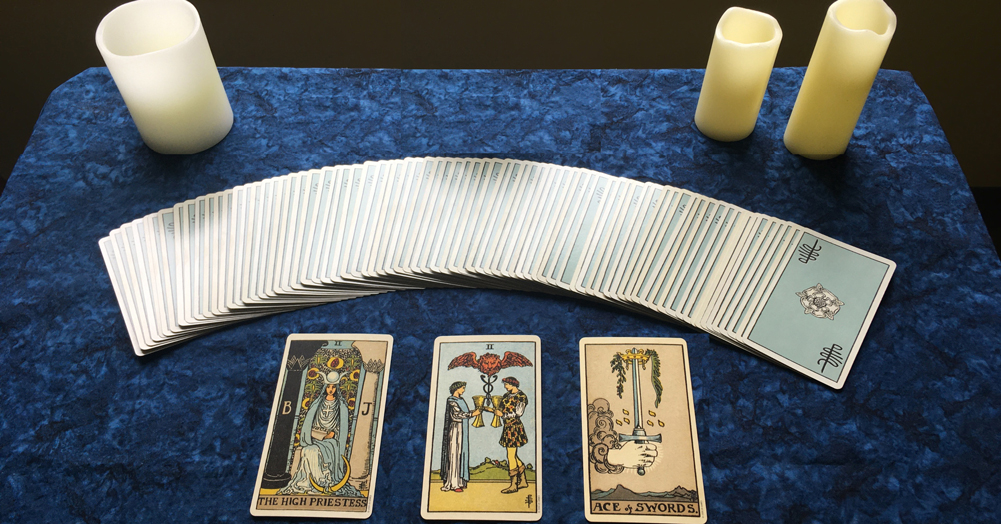
Earlier this year, I attended a “Witchcraft 101” class at a shop called Olde Magick in Prescott, Ontario. The instructor asked us to think about what type of witch we were. When I came up empty, she said she saw me as a gypsy, due to my fascination with Tarot.
I know the word “gypsy” can have negative connotations, but she absolutely meant it in a positive way. And it resonated with me because my Polish grandmother used to tell stories about “cygan” or Romani people (or cyganka, the feminine). I thought they sounded beguiling: wanderers and fortune-tellers who lived, dressed and made their homes their own way, regardless of what others thought. I think the best word to describe that, for me, is “bohemian.”
I know there are bohemian witches out there, and truthfully I don’t fully ascribe to everything they seem to symbolize either. I don’t believe in Pagan gods, although I do believe in a divine spirit. I do believe in honoring the Earth and its natural cycles, and I find the ancient rituals fascinating, but I don’t feel any strong urge to replicate them exactly. I’m not sure spell-casting is my thing, but I’m very much into meditation, energy work, shadow work, and other ways to manifest a connected, spiritual life. But I think eclecticism is inherent to a bohemian outlook.
I’ve been searching for a podcast on eclectic bohemian witchcraft, and I haven’t really found one I like yet. So, I recently started listening to different Tarot podcasts instead, and one, while it wasn’t a match for ongoing listening, recommended a book I’m now obsessed with.
The book is titled Tarot for Change — Using the Cards for Self-Care, Acceptance and Growth by Jessica Dore, and I can’t recommend it enough!
I’ve written about mindfulness and metacognition in the past. A few weeks back, I wrote about the links between Tarot and Jungian psychology. This book, written by a licensed social worker, takes all of those interests, adds more information about different psychological approaches, and creates a guide on using Tarot to explore what’s holding you back from being the best, happiest, and most self-accepting person you can be.
So far, I’ve read through her explorations of the Major Arcana. She includes information on the traditional interpretation of the cards, but delves even deeper into what might be behind those. What are some archetypal thoughts and beliefs symbolized by the cards, and how might those beliefs limit you from a fuller life?
For example: The Moon card is typically interpreted as meaning confusion or disorientation. Dore doesn’t disagree, but questions the belief that confusion is necessarily a bad thing. Our brains are wired for resolution. We want to know the answers. But sometimes, allowing ourselves to sit with confusion, rather than driving toward an answer that may not be right, we may come to more questions — and those questions might lead to greater insight and a better outcome.
This mindful approach to the Tarot is one that helps connect all my eclectic bohemian beliefs and gives me hope that I can become the person I was born to be.
⋆˖⁺‧₊☽◯☾₊‧⁺˖⋆
Did you enjoy this post? Please like, comment or share below. And check out other posts on my blog, “The Good Witch of the North Country.”
 Communicating Authentically
Leave a comment