As the saying goes, “Everybody’s Irish on St. Patrick’s Day!” Every year on March 17, millions of Irish Americans — and those who just want to be part of the tradition — celebrate St. Patrick, the patron saint of Ireland, with the wearing o’ the green, eating corned beef and cabbage, and drinking green beer or Irish whiskey.

Who Was St. Patrick?
According to Patrick’s own words in his Confessio, “‘I am a sinner, a simple country person, and the least of all believers. I am looked down upon by many.” In this book, he writes that he lived in a part of Roman Britain, until about the age of sixteen, when he was taken as a prisoner to Ireland, where he worked tending animals for about six years. In a dream, he was told the way to escape, and he was able to make his way back to his family in England. He studied to be a priest, and eventually became a bishop. In another dream, he heard the voices of Irishmen asking him to return, so he did.
As a Christian priest, he began preaching and building churches around that country and became Ireland’s most famous priest. It is said that he died on March 17, sometime around 461. That date has been Saint Patrick’s Feast Day since the early 17th century.
St. Patrick’s Day Legends
One lasting legend about St. Patrick is that he banished the snakes from Ireland. Some say these tales are a metaphor for driving pagan religions, such as Druidism, out of Ireland, because serpents were an important Druid symbol.
Many other legends describe Patrick’s clashes with the Druids. One such legend is the “inextinguishable fire”: it is said that in the fifth century, Ireland celebrated the Druid tradition of the new year in the spring. On the eve of the vernal equinox, no fires would be lit until the Druids lit the first bonfire on the Hill of Tara, where the High King’s castle stood. Patrick flouted that tradition and built his own fire first, on the Hill of Slade, just opposite Tara. Enraged by this insult, the Druids converged on Slade with water buckets, but were unable to put out Patrick’s fire. Another legend says that Patrick and his followers once turned themselves into deer to avoid a Druid ambush.
However, it’s just as likely that the legends of St. Patrick clashing with the Druids or driving them out of Ireland are revisionist exaggerations: there were still Druids in Ireland for centuries after St. Patrick’s death; these tales likely came about after Christianity became the major religion in Ireland.
Other legends indicate that Patrick took a more peaceful approach toward the Druids, tailoring his preaching to their existing beliefs. One such example is the legend of the shamrock. It is said that Patrick used the three-leafed flower, which is said to have been a sacred plant to the Druids, to illustrate the Holy Trinity: one God in three beings. (The four-leaf clover really has nothing to do with Ireland or St. Patrick; it’s just a symbol of good luck.)
Another myth is that St. Patrick created the Celtic Cross, a cross inside a circle, because the circle was prevalent in Druid symbolism. This myth is also questioned; the Celtic Cross may have existed even before St. Patrick’s lifetime.

The truth probably lies somewhere between extremes and may be moot. Like most legendary figures, St. Patrick’s legacy is iconic, and is an important part of Irish culture and history.
American St. Patrick’s Day Traditions
Many St. Patrick’s Day traditions are strictly American:
Parades: The first St. Patrick’s Day parade was 1737, in Boston. The greenest parade is probably in Chicago (see below), but the longest running and possibly largest St. Patrick’s Day parade is in New York. Held continuously each year since 1762, it now boasts about 150,000 parade marchers, and about two million spectators.
Dyeing the Chicago River green: Each year since 1962, thanks to Chicago Mayor Richard J. Daley, the Chicago River is dyed green the Saturday before each St. Patrick’s Day. Spectators can watch the dyeing process, from both sides of the river between the Wabash Avenue and Columbus Drive bridges. Boats dump about 45 pounds of dye into the river, which makes it run green for the next five hours. No one is sure exactly what the dye is made of, but directors of Friends of the Chicago River have been reported to say, “It’s not the worst thing that happens to the river.”

Corned beef and cabbage on St. Patrick’s Day: Though cabbage is a traditional Irish food, corned beef is not. In the early 1900s, Irish immigrants living in New York City’s Lower East Side needed an alternative to the more traditional Irish bacon, which was expensive. The local Jewish butchers sold corned beef, which was similar. Hence, a new Irish-Jewish-American tradition was born.
Ireland’s Prime Minister giving the U.S. President a bowl of shamrocks: This is in keeping with the tradition of Irish government officials meeting with other foreign leaders on St. Patrick’s Day, to promote interest in Ireland. The Irish PM has been giving POTUS shamrocks since 1952.
St. Patrick’s Day and Drinking
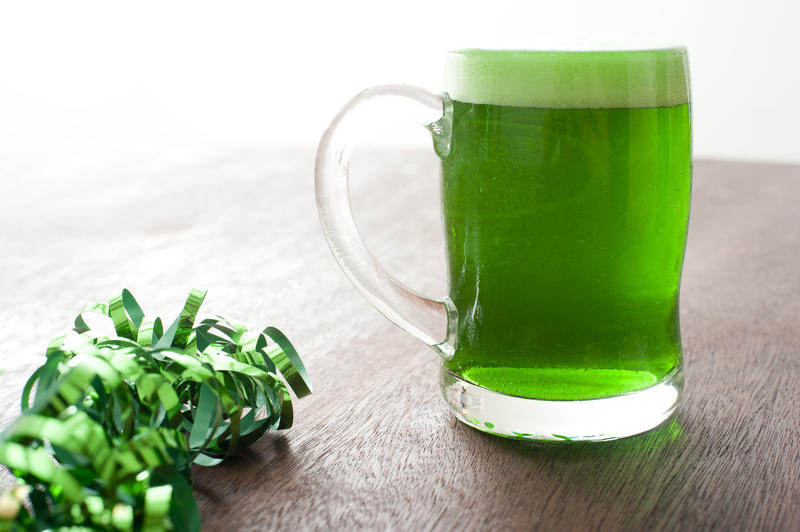
This is probably the most all-American St. Patrick’s Day tradition. According to WalletHub’s “St. Patrick Day Facts,” March 17 is the fourth most popular day for drinking in the United States, after New Year’s Eve, Christmas, and Independence Day. 152.5% more beer is sold on that day than any other, and 819% more Guinness Irish beer — that’s 13 million pints that will be quaffed worldwide on St. Patrick’s Day.
Some additional, sobering numbers from the U.S. Department of Transportation:
33% – pedestrians killed in 2020 St. Patrick’s Day accidents who were legally drunk, having a blood alcohol level (BAC) of .08% or higher
37 – people killed in St. Patrick’s Day drunk-driving crashes in 2020; that’s one death every 58 minutes
75% – fatal St. Patrick’s Day crashes that involved a driver whose BAC was at least twice the legal limit
287 – fatalities occurred on St. Patrick’s Day between 2016-2020
If your St. Patrick’s Day celebration will involve drinking – sláinte! But please, drink responsibly. Make plans for a sober ride home: have a designated driver who is willing to stay entirely sober: remember, buzzed driving is drunk driving. Other options are using a rideshare service like Uber or Lyft. On a holiday with a higher number of drunk drivers on the road, there is no amount of alcohol you can consume if you want to drive home safely.
Erin go bragh!
The original version of this post, written by Celeste Rothstein, was published on the Torklaw blog.
 Communicating Authentically
Leave a comment